Planning a Gathering That Makes Room for Different Customs
Planning a gathering for different customs? Invite preferences early, explain what will happen, and offer clear ways to join without putting anyone on display.
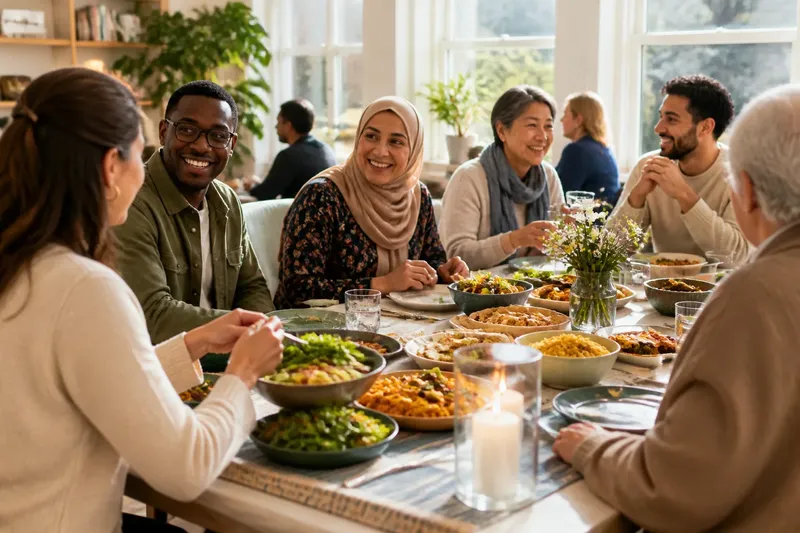
Planning a gathering for different customs starts before guests arrive: ask what would help people take part, then make the plan clear enough that no one has to guess. A shared meal, workplace celebration, or family event can include people with different practices without asking anyone to explain or represent a whole community.
The aim is not to anticipate every preference or create a separate event for each guest. It is to make choices visible, avoid avoidable pressure, and let participants decide how they want to join. Keep the invitation, the schedule, and the room itself aligned with that aim.
What should I ask guests before the gathering?
Ask about practical preferences that could change someone’s experience, and give people a private way to answer. A short invitation note or direct message can ask about food, timing, participation, access needs, and whether any part of the event could create discomfort.
Make the questions optional. People may not want to share personal, religious, or family information, and a preference does not need an explanation to be useful. Avoid asking one person to advise on behalf of a group. If you need general guidance, consult a reliable community resource rather than assigning that work to a guest.
Useful questions include:
- Are there foods you avoid or need clearly identified?
- Would a quiet place or a break option make the event easier to attend?
- Are there parts of the planned activity you would prefer to observe rather than join?
- Is there anything about the schedule or format you would like me to clarify?
Let guests know who will see their replies and how you will use them. If someone raises a need you cannot accommodate, tell them honestly and discuss possible alternatives rather than leaving the question unanswered.
How do I invite preferences without asking guests to speak for a culture?
Ask each guest what works for them as an individual. Customs can vary within families and communities, and a person may follow a practice in one setting but not another. A broad question such as “What does your culture require?” can make someone feel responsible for giving an authoritative answer.
Instead, write: “We’re planning a shared meal and a short group activity. Is there anything you’d like us to consider so you can take part comfortably?” This asks for useful information without assuming what the answer should be.
Say you are organizing a family gathering with a meal and a toast. One relative privately says they do not drink alcohol and would rather not be singled out. You can provide a nonalcoholic option for everyone and introduce the toast as optional, without naming that relative or asking them to explain. The observable result is a choice guests can make without turning one person’s preference into a public lesson.
How much should I explain about the plan?
Explain the sequence in plain language before the event and repeat the essentials when guests arrive. Tell people when food will be served, whether there will be a welcome or ceremony, how long shared activities are expected to last, and where they can take a break.
Use ordinary descriptions rather than insider terms without explanation. If a gathering includes a customary welcome, say what guests will see and what they may choose to do. Do not present an unfamiliar practice as mandatory unless participation is genuinely required for the event. If it is required, state that clearly in the invitation so people can decide whether to attend.
A simple schedule might say: “We’ll gather for a welcome, share the meal, and then offer a short activity. You’re welcome to watch, join in, or step out at any point.” This wording gives people a useful preview and makes the options concrete.
How can people choose how to take part?
Build more than one reasonable way to participate into the event. A person might join an activity, observe it, arrive after it, or take a break. Make those choices feel ordinary, not like exceptions that require a public explanation.
For a group ritual or shared moment, explain what will happen and offer an alternative such as listening quietly or remaining seated. Do not ask guests to show agreement through a gesture, speak a particular phrase, or handle an object unless that is part of the event’s actual requirements and has been clearly described in advance.
Hosts can also reduce pressure by avoiding surprise participation. Invite people to volunteer for a reading, toast, demonstration, or other visible role rather than selecting someone without warning. If a contribution is central to the gathering, ask the person privately first and accept a no without bargaining.
Make opting out easy to see and easy to use. A quiet seat near the gathering space can help someone remain present without joining every activity.
What should I consider when planning food and shared activities?
For food, ask about restrictions and preferences, then label dishes in direct terms. List ingredients that matter to guests and keep serving utensils with their dishes where practical. If food is prepared by a caterer or host, describe what you know; do not guess about ingredients or preparation.
Offer choices that do not require guests to announce why they select them. For example, a meal can include several clearly labeled dishes rather than marking one option as “special” for a named person. Consider whether guests can serve themselves or whether the format creates pressure to accept what is offered.
For activities, check whether they require touch, movement, speaking, eye contact, or handling an object. Explain what is involved and provide a way to participate that does not rely on those actions. A game can have an observer role; a discussion can allow people to pass. Keep alternatives connected to the gathering so no one is left waiting alone.
When a preference depends on an ingredient label, a provider’s instructions, or local requirements, check the relevant source rather than relying on memory.
How do I respond if a guest raises a concern?
Listen without challenging the person’s reason or asking them to educate the group. Thank them for telling you, ask what adjustment would help if that is not already clear, and explain what you can change. If you cannot make the requested change, say so directly and offer any workable alternative.
Keep the conversation private unless the guest asks you to raise the issue more broadly. Avoid announcing who requested an adjustment. You can make a general change without attaching it to an individual, such as clarifying that the activity is optional or adding a quiet place to sit.
If several guests give different preferences, do not assume one answer represents everyone. Look for a format that preserves choice, then tell people what you decided. A clear response helps guests plan even when the event cannot meet every request.
What questions should I settle before sending the invitation?
Should I list every custom the gathering includes?
Describe the activities that affect what guests will do, see, eat, or hear. You do not need to provide a cultural explanation for every detail; a clear account of the schedule and choices is usually more useful.
Should I ask about customs in a group message?
Use a private reply option for personal preferences. A group message can share general logistics, but it may pressure people to disclose needs in front of others.
What if I do not know whether a practice will be welcome?
Explain the planned practice plainly and ask participants about their own preferences rather than assuming. If you need background knowledge, seek it from a suitable source without making a guest responsible for providing it.
Do I need to change the event if someone opts out?
Not always; someone may be comfortable observing while others participate. Make the option clear and consider a broader adjustment if the format would otherwise isolate or expose that person.
How can I make the invitation feel clear and welcoming?
Keep the invitation specific. Include the purpose, schedule, meal information, expected participation, and a private way to share preferences. Avoid vague phrases such as “everyone knows what to do” or “we’ll all join in,” which can leave guests unsure whether attendance means participation.
For example: “We’ll share dinner, then have a brief group activity. Joining the activity is optional, and you can take a break at any time. Please reply privately if you have a food preference or would like more detail about the plan.” Adjust the wording to match the actual event; do not promise choices that the schedule cannot support.
Planning a gathering for different customs works best when the invitation and the event offer the same options. Before guests arrive, check that the host or facilitator knows how to explain the schedule, where breaks are possible, and how to respond if someone chooses not to join. A calm, matter-of-fact welcome lets people take part on their own terms.