The Myth That Traditions Stay the Same
Traditions do not need to remain unchanged to matter. Learn how to adapt a tradition with care while keeping its shared meaning visible.
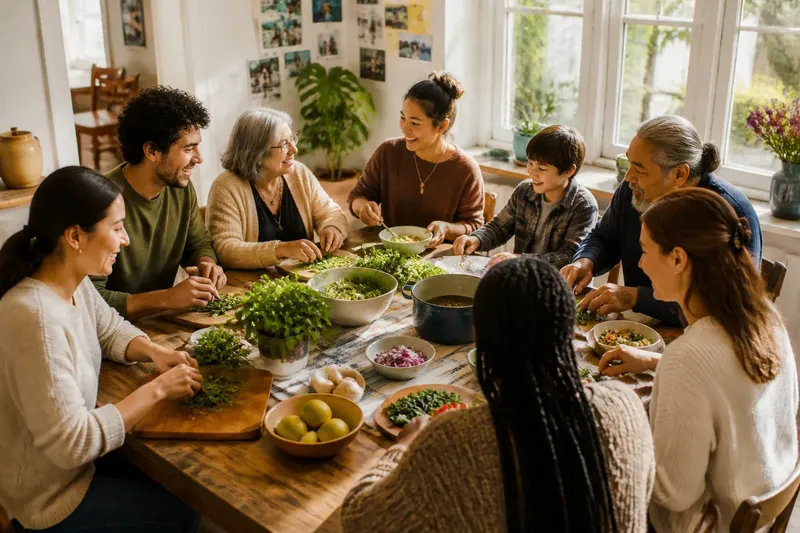
Traditions change, and that does not automatically make them less meaningful. If you are wondering how to adapt a tradition without losing what matters, begin by asking what people are trying to carry forward—not which details have remained untouched.
A tradition is not a sealed object passed from one generation to the next. It is a practice people repeat, explain, and adjust in particular circumstances. A family meal may move to a different day when work schedules change; a community ceremony may find a new venue when its usual space is unavailable. The details shift, while people continue to recognize a shared purpose.
That does not mean every change is welcome or that continuity is irrelevant. It means that a tradition’s meaning cannot be judged by sameness alone. A useful way to approach change is to treat it as a conversation: notice what people value, make any adjustment visible, and leave room for disagreement.
What makes a tradition feel continuous?
Continuity often comes from recognizable connections rather than an exact script. People may recognize a practice through who takes part, what relationship it honors, when it happens, or the story told around it. One household might keep a particular dish at a seasonal gathering because a relative taught the recipe; another might preserve the gathering’s shared preparation even after the menu changes.
Those connections are not interchangeable for everyone. A detail one person considers incidental may be central to someone else’s experience. Before proposing a change, ask participants what they would miss and why. Listen for the purpose beneath the answer: remembrance, welcome, gratitude, belonging, or a link to a particular place.
Be specific. “We have always done it this way” describes repetition, but it does not explain what the repetition means. A more useful account might be, “We make this together so everyone has a role,” or, “We return to this place to remember the people who cared for it.” Such explanations help a group distinguish a meaningful connection from a habit that no longer serves the same purpose.
How can you adapt a tradition with care?
Use a short routine spread across a week or a season rather than trying to settle every question in one conversation. This is not a formula for reaching agreement. It is a way to give people time to describe the practice, consider a specific adjustment, and notice how it feels afterward.
- At the start of the week, describe the practice. Write down what happens, who participates, and what people say the occasion means. Keep the description observational; avoid calling one version the authentic one before hearing from others.
- In the next conversation, ask what must remain recognizable. Invite participants to name the parts they value and the reasons behind them. Ask about practical needs too, such as access, scheduling, language, or who is being left out.
- Before the next gathering, choose one modest adjustment. Make the proposed change concrete. For instance, move a shared meal to a day when more relatives are available, while keeping the act of preparing and sharing it together.
- During the gathering, explain the change plainly. Say what is different and why the group chose it. Do not claim everyone agrees if they do not; a clear account lets people respond to the actual decision.
- Afterward, ask what participants noticed. Which part still felt connected to the practice’s purpose? Did anyone feel overlooked, or did the adjustment make participation easier? Treat these responses as information, not a vote on whether the tradition is real.
- At the next suitable occasion, decide whether to keep, revise, or reverse the adjustment. Record the reason, especially if the group expects people who were absent to ask about it. A change can remain temporary while people learn from it.
Say a family usually marks a seasonal occasion in one household, but a relative can no longer travel there. The family discusses which parts matter most, then meets at an accessible community room and keeps the shared cooking and storytelling. The expected observable result is that participants can still take part in those activities, while the new location is openly understood as an adaptation rather than a claim that nothing changed.
Keep the adjustment small enough to discuss clearly. Changing several parts at once can make it hard to tell which change people are responding to.
Who gets to describe a tradition as authentic?
Traditions are often shared across generations, households, neighborhoods, or communities, but those groups may not agree about what should continue. Elders may remember a version younger participants have never encountered. People who moved away may hold a different memory from those who stayed. Someone who has been excluded from a practice may describe its meaning differently from someone who has always belonged.
There is no single person who can speak for every participant in every circumstance. A group can still make a responsible decision by identifying whose knowledge is relevant, inviting people affected by the change to speak, and being honest about who made the decision. If a practice belongs to a community beyond one family or organization, consult that community rather than assuming one participant can authorize changes for everyone.
Disagreement deserves more than a quick label. Someone who objects may be protecting a memory, a relationship, or a practice that others do not fully understand. Ask what they fear will disappear. Then explain the proposed adjustment and invite them to identify a way to preserve the connection they value, if that is possible.
Some disagreements will remain. A group can acknowledge that plainly without pretending that every version has equal standing or that one decision settles the question for all time. The most useful record is modest: what changed, who took part in deciding, and what the group hoped to preserve.
What can you do when people disagree about change?
Slow down the discussion and separate different questions that may have become tangled together. Participants may be arguing about the practical arrangement, the meaning of the tradition, or who has authority to decide. Naming the disagreement more precisely can keep a practical adjustment from being mistaken for a judgment about someone’s identity or memory.
Try asking these questions in order, without treating them as a vote:
- What part of the practice is changing: its timing, place, participants, materials, or explanation?
- What meaning does each participant connect to the part in question?
- Who will experience the consequences of the adjustment, including people who are not in the room?
- Can the group try a limited change and revisit it, or would even a trial alter something that should not be treated casually?
If the proposed adjustment affects a community’s sacred, ceremonial, or culturally specific practice, do not assume good intentions are enough. Ask the relevant community what consultation is appropriate and respect its answer. A tradition’s continued life is not a reason for outsiders to take control of how it is interpreted.
How do traditions change without losing their connection?
Change is easier to understand when people can see the thread between an earlier practice and its current form. That thread might be a shared task, a story, a relationship, or a reason for meeting. It does not have to be identical for everyone, and it should not be invented after the fact to make a disputed decision sound inevitable.
Make the connection visible in ordinary language. Someone might say, “We changed the day so more people could join, and we kept the shared meal because preparing it together is how our family welcomes one another.” That explanation does not claim the new arrangement is the only valid version. It tells participants what the adjustment was meant to preserve.
Also leave room for a new version to gather meaning over time. Participants may come to value a revised practice for reasons that were not obvious at first. That does not erase earlier versions. A family can remember an older location, explain why it changed, and still build a genuine connection to the new place.
Questions people ask about changing traditions?
Does a tradition stop being a tradition when it changes?
No. A change may alter a practice without erasing its shared meaning or history. Ask whether participants can still identify the connection they value, and acknowledge the parts that have changed.
How do you know which parts of a tradition to keep?
Ask participants what each part means to them instead of deciding from appearance alone. The answers can show which practices express remembrance, belonging, care, or another purpose the group wants to carry forward.
Should a group try a change before making it permanent?
A limited trial may help when the adjustment is reversible and participants can discuss it afterward. It is not appropriate to treat every custom as an experiment, particularly when a change would affect a community’s authority or a practice participants consider sacred.
What if some people prefer the older version?
Let them explain what they value and record that concern honestly. The group may preserve a connection to the older practice, choose a different adjustment, or disagree; it should not describe consent as unanimous when it is not.
How can you carry the decision forward?
Write a brief note after the group has had time to reflect. Include the earlier practice as participants remember it, the adjustment, the reason for making it, and any concern that remains unresolved. Keep the wording open to correction; a note is a record of one account, not the final authority on a living tradition.
Share the note with people who could not attend, and ask whether it describes the decision fairly. If the group plans to revisit the adjustment, say when or under what circumstances. A clear invitation to review can ease the pressure to settle every future question now.
The myth that traditions stay the same can make any change look like a loss. In practice, adapting a tradition can preserve a meaningful connection when participants understand what is changing, whose voices shaped the decision, and why a particular part still matters. Keep the explanation close to the practice, and let the people who carry it continue the conversation.